Growing up in and around the Adirondacks, we have come to appreciate the unique natural features of the landscape that define and distinguish this extraordinary region from any other. From this appreciation has come curiosity, education, and resolve to understand why forest preservation and conservation play a critical role in maintaining the identity of the Adirondack Park.
The very word 'conservation'evokes a broad spectrum of thoughts and feelings that vary from person to person. It can be daunting to discuss conservation within the Adirondack Park because conservation is rooted deep within us as a concept that has evolved from childhood with influences from our surroundings, our friends and family, and our connection to the natural world.
Conservation, simply stated, is the protection and preservation of natural resources. A major influence to one's perception of conservation as a principle is where they live. Conservation to someone from the mid-west can have a much different meaning than to someone from the Adirondacks. The Adirondacks themselves are a unique ecosystem with a confluence of ideas about what conservation means, or should mean, to this park.
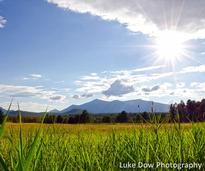
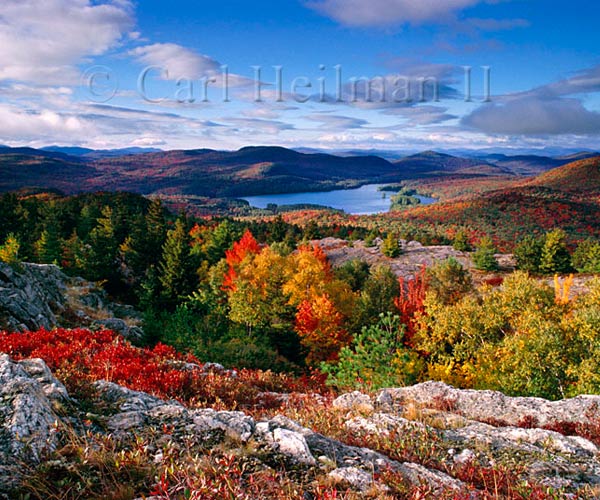
If you have ever crossed into the famed blue line, or if you are lucky enough to live there, you have visibly noted the vast stands of spruce and fir interspersed with birch, beech, maple, and hemlock forests. These contiguous and pristine forests remain today as a symbol of preservation transcending two hundred years of development.
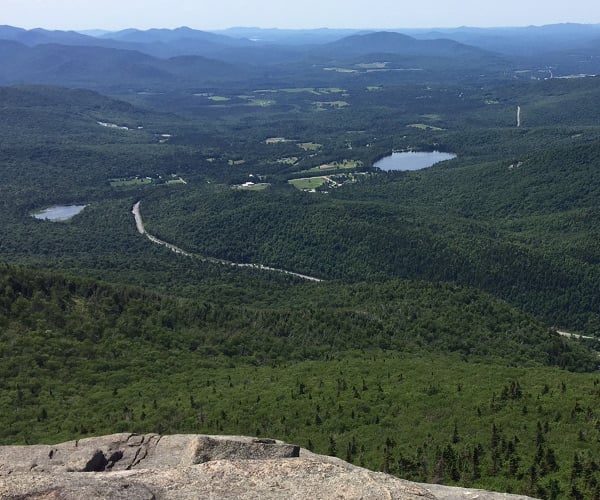
The park is home to vast quantities of streams, rivers, ponds, and lakes with exceptional water quality, in part due to their glacial origin, as well as the protections they have been given by those with foresight enough to recognize the importance of clean water.
To us, conservation is embodied within the very essence of the Adirondack Park. As times change, threats to our natural resources can vary, and so must our techniques to conserve them. We hope that our future posts can educate park users and residents, and inspire ideas on how they can protect, conserve, or live lightly within the park, preserving this magnificent landscape for the future. After all, the mountains, forests, streams, and lakes will be here long after we are.
What does conservation mean to you?
Kristel Guimara Hello everyone and welcome! My name is Kristel Guimara and I currently live in the beautiful northern Adirondacks. I have my Bachelor's degree in Biology with a concentration in Environmental Science from Paul Smith's College located in Paul Smith's NY. Currently, I am in my second year of graduate school pursuing my Master's Degree in Conservation Biology from Green Mountain College in Poultney VT. I am currently researching the effects of black carbon concentration in the Adirondack snowpack which will be compared to samples taken in the Arctic Regions. This I hope will continue beyond my thesis requirement.
The 1st thoughts that come to mind are education and
enforcement. People that utilize the park for a wide variety of
reasons need to understand the fragility of the land and its
reaction to misuse. Guidelines regarding "land use" would help
to educate those visiting and those living here.
The polluting and sterilization of ADK ponds have basically
have been allowed via the greed of big business and big
government. Where is the UPROAR for killing hundreds of our
ponds?? NO real enforcement here..
Living on Lake George, I have heard the owner of an expensive
cabin cruiser say " Why shouldnt I leave my sewer line open,
I dont drink the water "..
Education AND enforcement need to go hand in hand..