WHITEHALL
As Washington County celebrated its bicentennial, the Town of Whitehall observed its 225th year of existence. Established in 1759 as Skenesborough under Captain Philip Skene, the town obtained its first formal charter in 1765 when its founder received his initial grant of land from King George III.
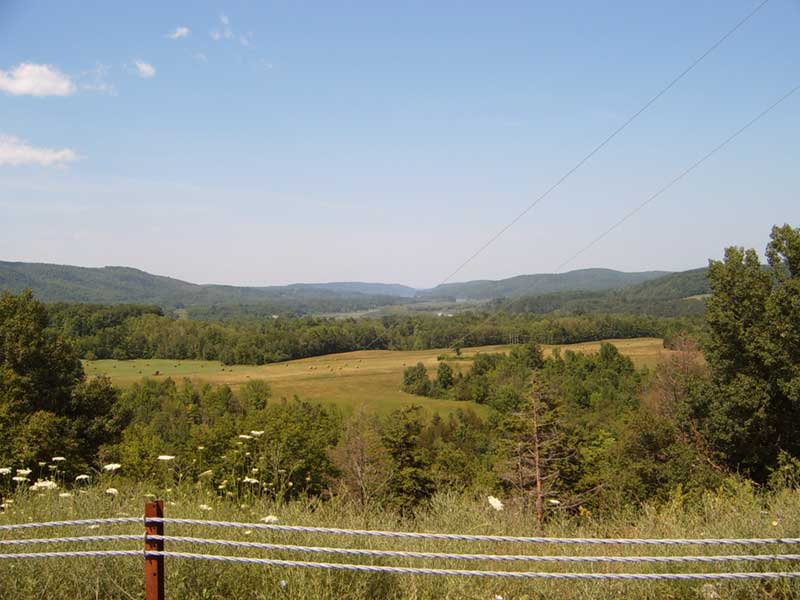
Whitehall's farmlands are still adjacent to Lake Champlain - an important
transportation route that was a key to the area's development and lifestyle.
The small settlement at the lake harbor itself has become a village of
nationwide interest for its historical and scenic values. Involved in the
events of two world wars, the American Revolution and the War of 1812,
Whitehall has unique significance as the Birthplace of the United States
Navy and Marine Corps. Until recently, Whitehall was also the depository
of un-blueprinted ships of the War of 1812. This story is illustrated in
the Revolutionary cannon on the State Armory lawn, the Skenesborough Museum
and historic markers. 
The growth of the town's commercial sector during the Champlain Canal era recently has resulted in 37 buildings consisting mostly of brick from local brickyards being placed on the National Register of Historic Places. The village is one of 13 pilot areas in the new State Urban Cultural Park System. The replica of an 1892 bandstand is the first project of the new system in Whitehall.
The large boat building era - lake steamers, canal boats, tugs and row boats - gave way to current travel on the Champlain Barge Canal primarily by tankers and pleasure cruisers. It is still possible to moor boats along the center of the village so that their owners can shop or sightsee while waiting to enter or leave Lock 12.
Whitehall's
economic base depended earlier on the diversification of lumber, wood products
and some minor manufacturing industries. This was interrupted for a time
by two monopolies, the Champlain Silk Mill and the D&H Railroad. A
return to diversity has come about in industries producing carriers, plywood,
shirts, wood products metal products and trailer parts. Additionally, the
town outside the village is still an important part of the state's milk
shed.
As the settlement grew at the head of the lake, it was deemed necessary to have a form of government that satisfied the needs of the people who lived closer together. As a result of this need, the Board of Village Trustees was formed with separate officers of both town and village still continuing to work closely for the benefit of Whitehall as a whole.
Education has always been important to Whitehall's citizens. Their concern for quality education has evolved into a school complex of an elementary and senior high school with a fine faculty, educational facilities, library and sports.
Whitehall's religious community was first served by visiting clergymen in the 18th century, and has now grown to include the congregations of Assembly of God, Baptist, East Whitehall Methodist, Jehovah's Witness, Notre Dame des Victoires, Our Lady of Angels, Southern Baptist, Trinity Episcopal and United Methodist.
The area's many social organizations have combined effective community service with conviviality. The early fire engine and hose cart companies have been replaced by two major companies - Skenesborough Volunteer Fire Company and Whitehall Volunteer Fire Company, Inc. - that cooperate in village and town with well-trained and zealous firemen and modern equipment.
Another volunteer company bringing security to area citizens is the Skenesborough Emergency Squad. Nationally-allied fraternal societies such as American Legion, Chamber of Commerce, Brotherhood of Protective Elks, Knights of Columbus and Masonic Orders with auxiliary supporting groups seek opportunities for charity and community work and entertainment.
Public
library service is provided to the community in a building of its own which
also houses the Historical Society of Whitehall and Town Research Library.
Its facilities are augmented by membership in the Southern Adirondack Library
System.
Today, tourism now invites people to Whitehall to enjoy its many architectural treasures of the past, the scenic beauty of land and water and its history depicted in Skenesborough Museum.
Whitehall has changed in its 225 years of existence both socially and economically, but it still remains a fine place to live with its friendly population, favorable weather and sources of work and recreation.
Back to:
Your Complete Guide to the Adirondacks
Home Pages of the Adirondacks
| Things to do/Places to Stay | Regional
Information
Business Search of the Adirondacks | Real
Estate of the Adirondacks | Home
©1998 AdirondackNET
Email: webmaster@adirondack.net