Adirondack Winter Hiking Tips for Beginners
What to Wear, Bring & Know Before You Go
Planning your first cold-weather adventure? These Adirondack winter hiking tips for beginners will help you stay warm, safe, and confidently prepared on the trails. From choosing the right layers and packing essential gear, to checking weather updates and trail conditions, see what to know before stepping in the snow.

Garnet Hill Lodge offers options for both activity and relaxation. Spend the day exploring the cross-country ski and snowshoe trail network, then retreat to the cozy Log House to warm up by the fire. Ski passes are included with overnight stays! Learn More »

How Do I Check Winter Weather & Trail Conditions?
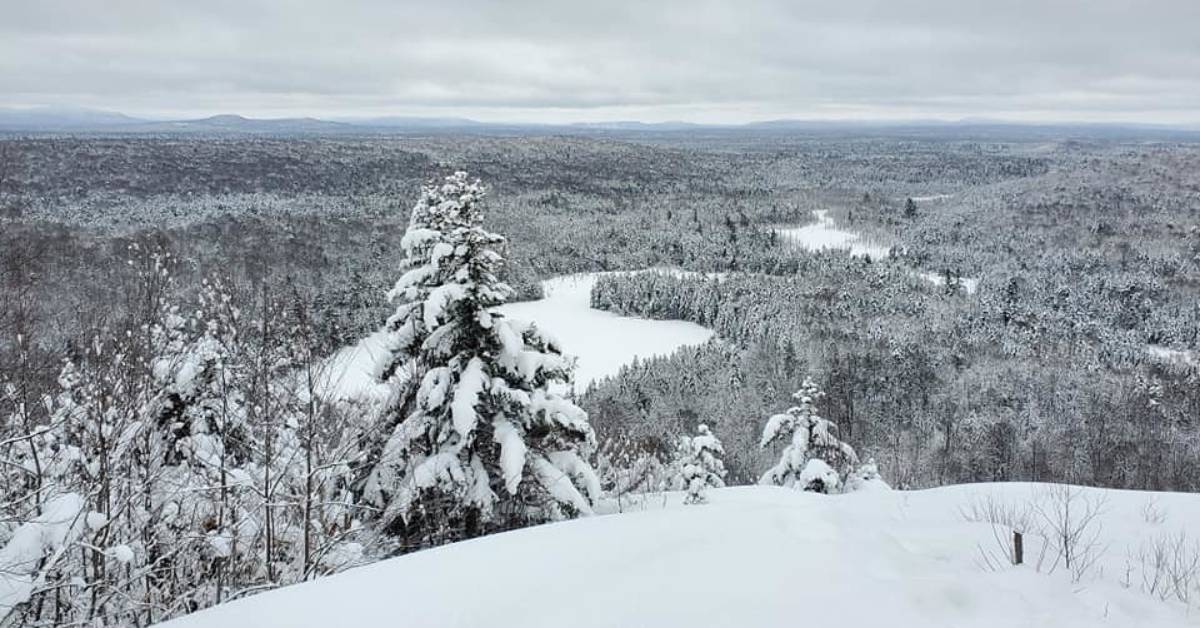
Winter in the Adirondacks - especially in the High Peaks - can be harsh. Conditions at the summit are almost always more extreme than at the trailhead, so don’t be fooled by a mild start.
Before you hike, always:
- Check the weather forecast for the exact region you’re visiting
- Look for chance of precipitation and any winter storm advisories
- Read updated trail notices
- Verify current temperatures at both the base and the summit
- Check how much snowfall the area has recently received
When you know how much snow there is, you'll know if you need to bring snowshoes, microspikes, or cross-country skis.
Don’t forget about daylight:
- Winter days are short! Confirm sunrise and sunset times
- Try to avoid hiking in the dark
- Bring a headlamp or flashlight, plus extra batteries, just in case
Bookmark our Current Conditions to check current info >>
See what's in local 46er Sam Perkins' winter hiking pack »
What Should I Wear for Winter Hiking in the Adirondacks?
According to the DEC, here are the essentials:
Wear:
- Waterproof outerwear
- Fleece or wool hat
- Winter boots
- Fleece or wool clothing layers
- Gloves or mittens
Bring:
- Day pack (2,500–3,000 cu. in.)
- Crampons
- High-energy snacks
- Sunglasses
- Sunscreen
- Ensolite pad
- Stove & extra fuel
- Map & compass
- Skis or snowshoes
- Flashlight or headlamp
- Water bottle
- Water purification device
- First aid kit
- Ice axe
- Bivy sack
- Space blanket
Additional tips:
- Pack extra food and water - enough for a few days
- Bring extra clothing to stay warm and dry
- When it comes to winter hiking in the Adirondacks, overprepared is better than underprepared
How Do I Stay Safe While Winter Hiking in the Adirondacks?
Proper gear is essential, but winter safety also requires smart planning and awareness on the trail.
Key Safety Tips:
- Hike with a friend (ideally someone experienced in winter hiking)
- Tell someone your route and timeline - cell service is limited in the Adirondacks
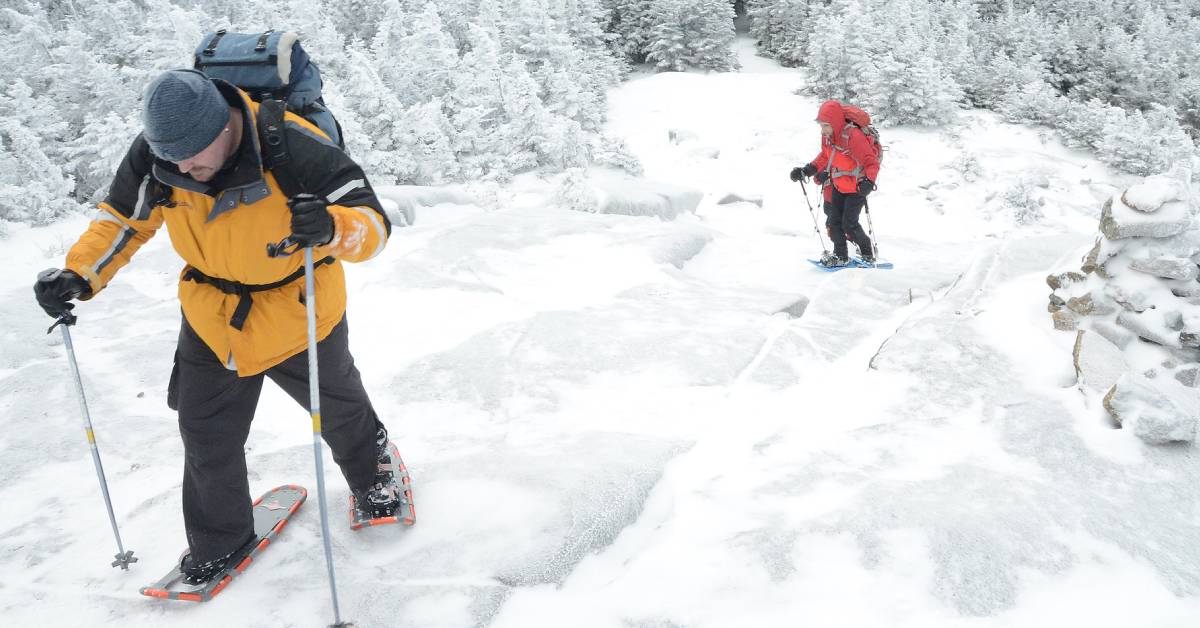
- Wear snowshoes or cross-country skis in deep snow - they reduce injuries and prevent post-holing
- Use crampons or traction devices on icy terrain
- Be cautious around ice and in areas with historical avalanche activity
- Winter hiking burns more energy than you think - eat, drink, and rest often
- Watch for signs of hypothermia - stay warm, dry, and fueled
- Look out for frostnip, the early stage of frostbite - red, very cold skin on fingers, toes, ears, nose, cheeks, or chin (stop and warm up immediately)
A final note for beginner hikers in the Adirondacks: While the Adirondacks are known for their High Peaks and stunning summits - and we've provided the above info so you're prepare for a true mountain hike - depending on how much of a beginner you consider yourself to be, you may want to start out with flat, easy trails.
These accessible trails could be a good start for beginner hikers in the winter!
« Back to the Winter Hiking Guide
« Back to the Beginner's Hiking Guide
Sources:
- http://www.dec.ny.gov/outdoor/28708.html#Winter
- https://www.rei.com/learn/expert-advice/winter-camping.html
Amazon Affiliate Disclosure: Our team independently recommends products on Amazon.com, and we earn from qualifying purchases.