The History of the Adirondack Chair: From Early 1900s to Present Day
While the moose is the most iconic animal in the Adirondacks, the Adirondack chair is the region's most recognizable object. But what are Adirondack chairs, and why are they called Adirondack chairs?
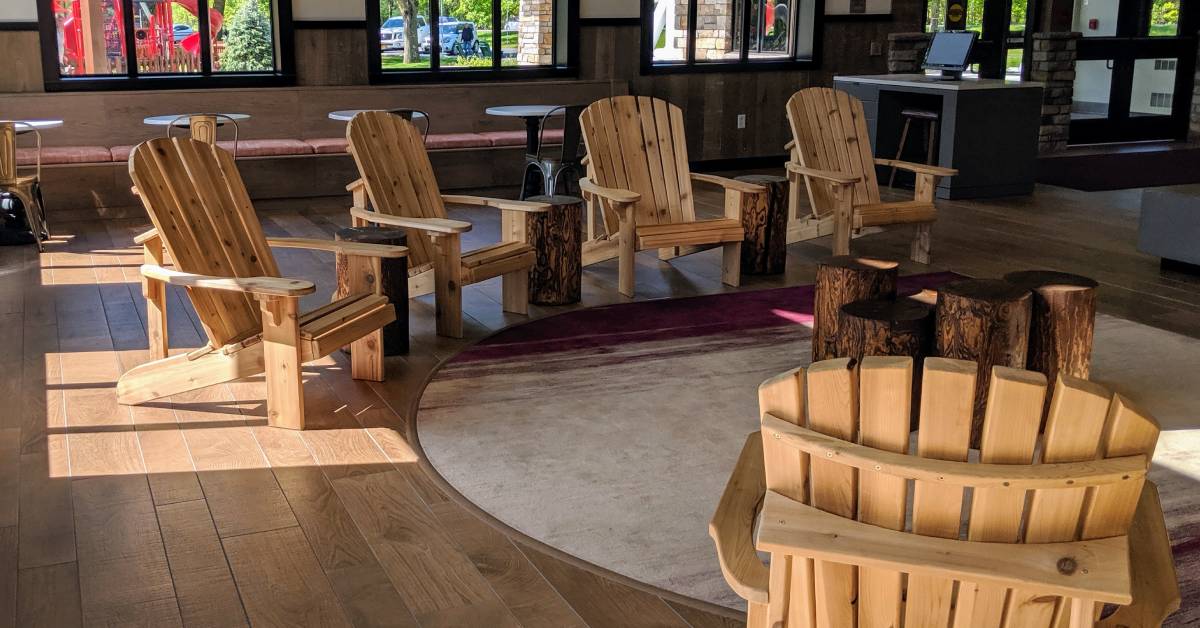
An Adirondack chair is an outdoor chair known for its wide armrests, tall slanted back, and deep angled seat. Originally designed in the Adirondacks of New York in the early 1900s, the chair has evolved into one of the world's most recognizable outdoor furniture styles. Although there are many variations today, ranging from colorful plastic chairs to two-person benches, every modern Adirondack chair traces its roots back to the original Westport chair.
To understand how this iconic design came to symbolize the Adirondacks, it's worth looking back at where it all began.

Thomas Lee & the Westport Chair: The Origin of the Adirondack Chair
Massachusetts native Thomas Lee is credited as the inventor of the Adirondack chair, which happened in Westport, New York in 1903. His family owned a house there, and he spent many of his summers there during the early 1900s.
Lee came from a wealthy family, graduated from Harvard, and then later abandoned law school in favor of working outdoors and being in the Adirondacks. Lee wanted to create a chair that could handle the rugged terrain of the Adirondacks. He wanted it to be sturdy, balanced, and comfortable no matter what type of ground it was placed on, from sloping hills to rocky shorelines.
From 1900 to 1903 Lee perfected the ultimate Adirondack chair design. Family members tested each protype before he moved on to the next version. Eventually, Lee arrived at what he considered to be the ideal outdoor chair, with wide armrests, a high back, and a slanted seat. It was created from one piece of wood.
The Rise of the Adirondack Chair
Not long after Lee finalized the design, he met up with his hunting friend, Harry Bunnell. Bunnell owned a carpentry shop in Westport, and Lee shared his chair design with him.
Bunnell, pleased at the prospect of having income during the winter season, began building and selling the chairs to the surrounding community. They quickly became popular, and after making the chair a bit more narrow, Bunnell patented his version of the Westport chair in 1904.
Accounts differ at this point - some believe that Bunnell patented the chair without Lee's knowledge or permission, although there is no significant evidence of this. It's not certain whether or not Lee was planning on patenting the chair himself.
Over the next two decades, Bunnell built a successful chair-making business and signed each chair he produced. As the Westport chair grew in popularity, its design gradually evolved into what we now recognize as the Adirondack chair.
Why Are They Called Adirondack Chairs?

Although Thomas Lee originally designed what became known as the Westport chair, the style became closely associated with the Adirondack Mountains, where it was first created and widely used.
As the design spread beyond the Adirondacks, people increasingly referred to it simply as the Adirondack chair. Today, the name is recognized around the world and has become synonymous with comfortable outdoor seating inspired by the region.
Interesting note: The same design in Canada is called a Muskoka chair, after a type of summer vacation cottage, and in France, this type of chair is known as a Laurentian chair.
The Tuberculosis Connection
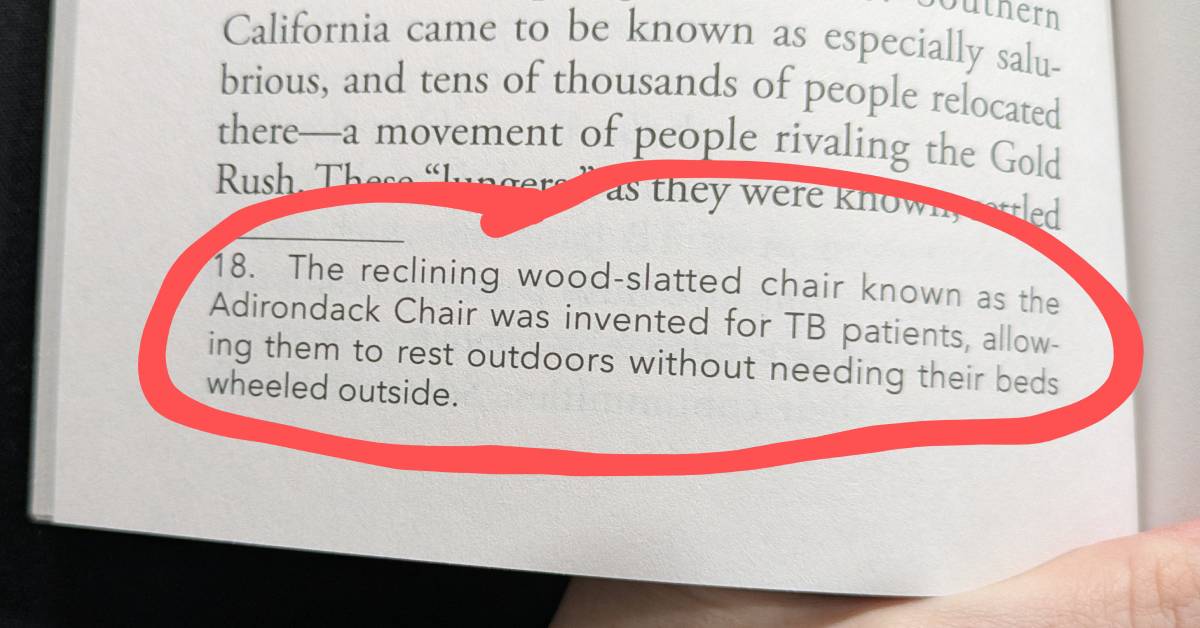
According to Everything is Tuberculosis: The History and Persistence of Our Deadliest Infection by John Green, the Adirondack chair became closely associated with tuberculosis treatment because it allowed patients to rest comfortably outdoors without needing their beds wheeled outside.
While the Adirondack chair was not necessarily invented specifically for tuberculosis patients, historians have noted a strong connection between its development and the Adirondacks' role as a center for tuberculosis treatment during the late 19th and early 20th centuries.
Fresh mountain air was considered an important part of treatment, which is why the Adirondacks became home to numerous tuberculosis sanitariums. Patients rested outdoors in collapsible steamer chairs, rocking chairs, or two stationary chairs pushed together. Eventually, specialized "cure chairs" were developed to provide greater comfort during long periods of outdoor rest.
At the same time, Lee/Burnell's chair was being developed for enjoying the outdoors around Lake Champlain. As the popularity of both styles grew, there was considerable crossover in their use and design. Manufacturers of cure chairs also began marketing to a broader audience, further linking the two styles.
As Smithsonian Magazine explains, "While cure chairs were specifically designed for TB sufferers... the frequency with which tuberculosis patients came in and out of remission blurred the line between who was ill and who was not." Plus, visiting family members used these chairs as well. As a result, many people who were not sick also adopted outdoor resting as part of everyday life.
The Modern Adirondack Chair

One reason the design changed over time was the difficulty of mass-producing chairs made from a single knot-free plank. To simplify construction and meet growing demand, carpenters began adapting the original Westport chair into designs that were easier to manufacture.
Both the original Westport chair and today's Adirondack chairs feature wide armrests, high backs, and slanted seats. However, modern Adirondack chairs use multiple wooden slats for the seat and back rather than large single boards. This change made the chair easier to build while preserving the comfort of the original design.
As these updated designs spread, the chair gradually became known as the Adirondack chair because of its origins in New York's Adirondack region.
In 1938, Irving Wolpin of New Jersey received a patent for another significant design update. His version, described as a "lawn chair," retained the slanted seat and wide armrests of the Westport chair while introducing the rounded back and contoured seat that many people associate with Adirondack chairs today.

Today, Adirondack chairs are available in wood, recycled plastic, HDPE lumber, resin, and other weather-resistant materials. Although they now come in countless colors and styles, nearly every Adirondack chair still reflects the core design principles Lee established more than a century ago.
Adirondack Chair Timeline

- 1903: Thomas Lee designs the original Westport chair while vacationing in Westport, New York.
- 1904: Local carpenter and business partner of Lee, Harry Bunnell, patents the design and begins manufacturing what became known as the Westport chair.
- 1910s–1930s: During the tuberculosis epidemic, sanatorium patients throughout the Adirondacks, especially in Saranac Lake, often rested in Westport chairs as part of the "fresh air cure."
- 1938: Irving Wolpin patents a rounded-back version of the chair, helping inspire the modern Adirondack chair design seen today.
- 1990: The first Adirondack chair made entirely from recycled HDPE plastic is introduced, paving the way for today's low-maintenance, weather-resistant versions.
- 2003: The Adirondack chair celebrates its 100th anniversary.
- 2010s: Giant Adirondack chairs become popular landmarks and photo opportunities across the Adirondack region.
- Today: More than 120 years after its invention, the Adirondack chair remains one of the world's most recognizable outdoor furniture designs and an enduring symbol of relaxation.
Frequently Asked Questions About Adirondack Chairs

What is an Adirondack chair?
An Adirondack chair is an outdoor chair with a tall slanted back, wide armrests, and a deep angled seat. It was originally designed in the Adirondacks of New York and has become one of the most recognizable styles of outdoor furniture.
Who invented the Adirondack chair?
Thomas Lee of Westport, New York, designed the original chair around 1903. His design later evolved into the Adirondack chair we know today.
Why are they called Adirondack chairs?
The original design became closely associated with New York's Adirondack region, where it was invented. As its popularity spread, people began referring to it as the Adirondack chair instead of the Westport chair.
What is the difference between a Westport chair and an Adirondack chair?
The original Westport chair was constructed from large single boards, while modern Adirondack chairs typically use multiple slats for the seat and back. Later versions also introduced the rounded back and contoured seat that are common today.
Where did Adirondack chairs originate?
The Adirondack chair originated in Westport, New York, on the western shore of Lake Champlain within New York's Adirondack region.
Why are Adirondack chairs so comfortable?
Their reclined seat, angled back, and extra-wide armrests are designed to provide relaxed outdoor seating while remaining stable on uneven ground, making them comfortable for porches, patios, beaches, and lakesides.
Main Sources:
- http://www.suncommunitynews.com/articles/ncl-magazine/adirondack-icon/
- http://www.clarksoutdoorchairs.com/adirondack_chair_history.html
- http://adirondackchairsexpert.com/adirondack-chair-vs-muskoka-chair-whats-the-difference-and-which-is-better/
- http://www.orvis.com/s/adirondack-chair-story-the-history-of-the-adirondack-chair/2978
- https://www.smithsonianmag.com/innovation/how-adirondack-chair-became-feel-good-recliner-cures-what-ails-you-180978322/
- Everything is Tuberculosis: The History and Persistence of Our Deadliest Infection by John Green
Patent Sources:
- https://www.google.com/patents/US794777
- https://www.google.com/patents/USD109239
Amazon Affiliate Disclosure: Our team independently recommends products on Amazon.com, and we earn from qualifying purchases.